Showing posts with label Book review. Show all posts

Saturday, 8 February 2014

With Behind the Scenes at the Museum - A Book Review

This is Kate Atkinson's first novel, but its the second of hers that I've read. A few years ago I read Started Early, Took The Dog, and it was okay. Now that I've read behind the scenes, I'm thinking of re-reading Started Early, Took The Dog to look for plot twists I hadn't noticed before.

This is the first book I read after a dry-spill infested with exams and tests and assignments, and just plain laziness, so naturally I dived in full force. However, I found myself unable to continue the book a third of the way through. Up until that point the book had been slightly too "Little Women" for my taste. You see, the book tells the story of Ruby Lennox, and her maternal ancestors up to her great great grandmother. And it gets confusing. But I plowed through, because I thought it would be rude of me to not give it a chance.

Besides the over-whelming number of names and characters, or possibly because of them, the book starts slightly slow. But the slight turns of phrase soon got more and more interesting and it became obvious that there are further depths to this story that I hadn't seen.

You see, this story is narrated by Ruby Lennox, and one of the most interesting twists is that she actually has a twin sister who died when they were four. She has no recollection of this sister, but hints of her are subtly included, like how Ruby notices that there are double as many photos of her than there are of any other sibling. So I have to give Atkinson this, the book is cleverly written. The plot may not be the most engaging, but the writing sure is.

If there was one theme to this book it would be misery. Every character is unhappy. And it really got me down. It made me realize how easy it is for life to turn south, and it creeps me out. So, dear reader, please appreciate your life and remember that it could be substantially worse.

All-in all I wouldn't exactly recommend this book to anyone, unless they have nothing else to read. And I don't think I would be re-reading it anytime soon.  

Sunday, 20 October 2013

With How to Be Good – A Book Review


This is the third book I read by Nick Hornby. And ironically-or conveniently - enough this is the first of his books that I like. The book is narrated by a 30-something year old woman who is tired of her grumpy husband, and wishes he would change. Or that the marriage would end.  And her husband does change but she soon resents his new found moral code as she was used to being the "good" one.

Hornby has such a magical way of writing even the mundane events into interesting plot points and this is what got me through his other books. This one is certainly no exception. The book is short and sweet, there are no complications in the plot, no unnecessarily complex flash backs. Everything just flows nicely.
But what makes this book my Hornby-Favorite is that the characters are so incredibly relatable and complex. Their relationship grew and progressed in such a charming way I could barely keep my eyes clear.  Frankly, I became genuinely invested in their lives. I wanted to know what happens. Their behavior was consistent, justified, in-character… so to speak. They felt like real characters and that is very rare! The story felt like it was real. Beyond any doubt these are events that could genuinely happen. No happy-sappy or melodrama.

All this just makes the downfall of this book all the more irritating; there is no resolution. When I was reading the last page I kept desperately thinking "come on, drop dead, set the house on fire, go crazy, something, anything" but no. The words ended but the story didn't. That’s the only way I can explain it. And I guess it makes sense. Since these characters exist, this is only a chunk of their lives. There is no resolution and a neatly packed ending tied-up-in-string, because there never is one in reality. Events keep on going, and life keeps on happening.

But I really want resolution. I want to make sure the characters are alright. I want to make sure they find themselves, and fall back in love with each other.  Hornby managed to create a friendship between these characters and myself but I'm not allowed to see how they turned out. I can't call or text or drop in, because he didn't finish their story. The words ended but their story didn't, like reality, and realty sucks.

Monday, 14 October 2013

With The Twitter Diaries - A Book Review

I have to be honest. The only reason I bought this book is because I thought it would be interesting to review. Written by Georgie Thompson and Imogene Lloyd Webber in the form of tweets. Yes. The entire books is written in the form of 140-character-messages between the two protagonists. Stella designs shoes for men while Tuesday, is a daytime-TV reporter. Although they are in different continents they become close over twitter and bond through their DM's.

There's usually an air of inconsistency in books that are co-authored and this book is definitely not an exception. The plot is weak at best and generally gave me no chance to relate to the characters. But perhaps this is expected from a light "chick-flick-book" ( I'm sure there is a better name for those) there is no denying that it is a fast read. That is, of course , if you plow through it. The story contains all the shallow humor and dry wit that is expected of chick-flicks. Along with the unrealistic catharsis and character improvement.

Now I love Twitter. But reading a story form through tweets is annoying.. and having characters defined only as ambiguous handles like @AllThatGlittersIsGold at times, and unrealistic ones like @mum at others can really take its toll on ones sanity.  There's also the oh-so-subtle allusion in the number of Twitter followers. The character gains followers in the high of the plot, and loses followers in the lows.

I wouldn't read this book again and I don't think I will recommend it to anyone. Unless they want a really light read for a plane ride or something.

Friday, 30 August 2013

With Alif The Unseen- A Book Review

Alif the Unseen was published in 2012 by G. Willow Wilson. Maria Suggested this book for me, check out her awesome blog here!  It tells the story of an Arab-Indian Hacker in an unnamed Arab country (geographically around Iran, but reads like an oil-rich GCC country) as he finds himself in trouble with his totalitarian government. So he flees to the most unlikely ally, the Jinn.

Reviewing this book is difficult; while reading it, I loved it. I couldn't put it down. But afterwards, thinking back, I am able to punch holes in the whole thing. While reading I considered giving it 5 stars. Now, I'm not so sure.

There's no denying that this book is beautifully written; with mesmerizing imagery that got me completely engrossed in their world and invested in every character. The plot is fast paced and kept me hooked throughout the book.

However, the first half  blatantly adopts plot points from George Orwell's 1984 though I guess that's acceptable since there's only so much you can do with a rebellion-against-a-totalitarian-government story.
The mixture of  folklore, religion, science and politics seems like an interesting combination, and potentially could be; except that Wilson over-simplified each aspect so that it became a non-cohesive cocktail. It's true that she seems to know about Islam, but missed out on the point that magic is an abomination of Islam. Arab politics is only portrayed in black and white, good and evil, while politics in general is usually several shades of grey.  And as to the greatest miss-step of all, she butchered the science aspect completely. It is obvious from the begging that the narrator knows nothing about computers or technology. It is just a truck load of "technobable" with random techy words thrown in, like linux, C++, RAM.  

Perhaps all these downfalls are because of the sheer number of plot points. Maybe if the plot had been cut down a bit, there would be more realistic plot progression and character development.

Yet on the other hand, these things didn't bother me while I was reading. I was so absorbed into their world that I didn't see any fault in it; except for the fact that the plot seemed to drag on a bit longer than it should.

So maybe I'm just too fussy, read the book and see for yourself, maybe even share your opinion with me.

Tuesday, 27 August 2013

With The Marlowe Papers- A Book Review

The Marlowe Papers, published by Ros Barber as part of her PhD is a collection of poems written in blank verse depicting the story of Christopher Marlowe.

Christopher Marlowe, is a *real* English author, poet, and translator from the 16th century. It is said that Marlowe was a great inspiration to Shakespeare. The premise of this book, however, is that William Shakespeare is Marlowe's pen-name, as Marlowe was a spy, wanted for treason, so he fled, faked his death and changed his name.

To start off I was excited, a novel in verse, I thought, a nice long poem. Except I soon realized that the Iambic Pentameter is not the most pleasant of meters. And that keeping the verse sometimes meant losing meaning and depth. While reading, my instinct was to read to the beat of the meter. But that meant that normal punctuation went out the window. Sentences broke in wrong places and merged, just to keep the meter up.  On the other hand, when I upheld the rules of English punctuation I found traces of systematic rhythm that I couldn't ignore. Perhaps I am not sophisticated, or smart enough for this style, but I found myself at loss as to how to read, that I found it hard to comprehend what I'm reading. However there are a few poems where punctuation and meter were in sync and I could truly appreciate the beauty of the verse.

The plot, like most Elizabethan novels, features themes of identity of betrayal that seem, to a modern me, incredibly vulgar. Kit Marlowe was a victim of his own beliefs, or lack thereof. As a renown atheist, he was persecuted for treason so he changed his name and started writing under a pen name, William Shakespeare. However, Marlowe didn't like this brand new life, and longed for his former life and friends. The whole book is a collection of letters, addressed to (from what I understood) the love of his life.

It is worth mentioning that while reading this book my thoughts were all in the Iambic Pentameter-which I despise. So I felt I was going to go crazy if I don't cleanse my thoughts.

The plot is nice, but I'm not sure the whole verse thing was the best of ideas. In general the book is okay. The idea is exciting but perhaps not the most interesting.

Wednesday, 14 August 2013

With Solar – A Book Review

Solar by Ian McEwan isn't the most remarkable book. It follows the life of the fictional Nobel-prize-winning physicist Michael Beard from the end of his fifth marriage, to the beginning of his sixth and seventh. Yes... Sixth and seventh simultaneously.  

It is apparent from the beginning that Beard isn't the most balanced of people. Even though he came up with the Beard-Einstein-Convergence he is a slave to his cravings, a compulsive eater and a pathological womanizer.

Despite the overwhelming amount of research that went into this book, Ian failed to convince me that the protagonist is all that smart. The manner in which the book passes over the research and effort required to come up with a theory in physics as if it is a peripheral, secondary part of Beard's life, and the way the author just throws random "big important scientific words" into the text put me off. However the story did make some really interesting arguments about global warming and gender inequality that I couldn't help but make notes about.


The book is also unnecessarily long. There are parts where the plot just stops progressing. So at times it was painful to read. I don't think I will be reading it again. 

The ending is also pretty lacking, as we don't get the catharsis we expect. 

Sunday, 28 July 2013

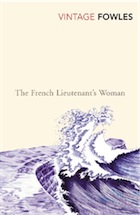
With The French Lieutenant's Woman by John Fowles- A book review

I bought this book from the Family Bookshop in MQ, and although it took me over a month to finish, I enjoyed every page.

The French Lieutenant's Woman is a novel set in the late 1800's and written in the 1960's by John Fowles, with possibly the most emotionally intriguing protagonist ever. It centers on Charles Smithson, as he ploughs through his engagement to the bland Ernestina Freeman. He meets the eponymous Sarah Woodruff; an eccentric, enigmatic woman who right away intrigues him as she challenges social conformity and more astonishingly, his intellect. But Sarah's reputation precedes her- she is frowned upon by the town for her questionable past.

The plot starts off plain and slow paced, but what kept me going is the eccentricity of the narrator. And I am glad I kept going; because this is a book that has certainly made a mark on me. Fowles writes what I can only assume is himself into the book as an omniscient narrator. At the same time, he manages to integrate himself into the story as a character. At one point he is in a train, staring at Charles, and at others he describes himself as he is looking through their windows, or following them on the street!

The characters are written with so much depth and authenticity that one starts to doubt their existence, every character, that is, except for the protagonist. Sara is only described as Charles sees her: clouded by the society's image of her at times, and by his emotions towards her at others.

Psychoanalysts would have a field day with Sarah. Several times in the book she is compared to sadistic sociopaths of her time. Yet there remains an air of mystery around her behavior. One thing remains certain though; she doesn't want to fit in. She kept the façade of a sinner throughout the plot just to be shunned from society.

Charles is a paleontologist and a Darwinist. So we find that he is often at loss between his science and the religious beliefs of his time. And this is perhaps one of the most prominent themes in the book. There rarely passes a story arc without an argument about natural selection and evolution. At one point, Darwin's On the Origins of Species is even used, in lieu of a bible, to swear upon, shedding the light on the driving force of modernism: an acceptance of science that does not follow the established beliefs. 

Plot aside, the most valuable thing offered by this book is an objective look at the Victorian era as a whole. The epilogue to every chapter is a poem, article, saying or anecdote from the era that provide an insight to the behavior of the characters at times, and to the society as a whole at others. Fowles also dedicates a few chapters to the comparison between the main characters and modern characters. The book is also riddled with footnotes further explaining the Victorian mindset.  

If the Victorian era intrigues you as it does me, then this is a book you cannot miss. Fowles' knowledge of it is comparable to one who had lived it. And I will most certainly read it several more times just to get lost in its depths.